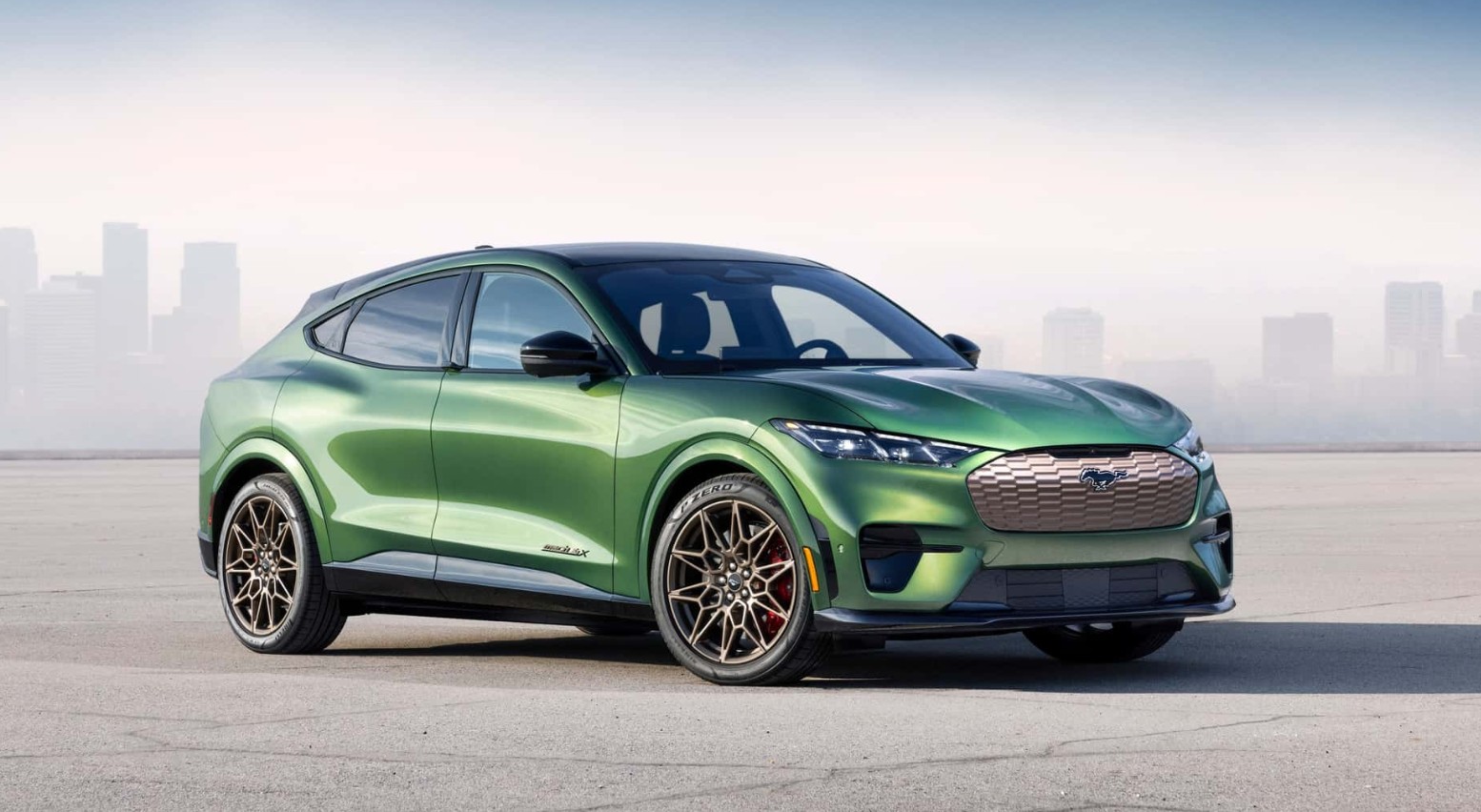
2028 Ford Mustang Mach-E Review, Specs, Dimensions – The 2028 Ford Mustang Mach-E could represent an important stage in the evolution of Ford’s electric SUV strategy. Since its introduction, the Mustang Mach-E has established itself as a distinctive alternative to conventional gasoline-powered performance SUVs, combining Mustang-inspired styling with fully electric propulsion and practical five-passenger accommodation. Its combination of instant torque, impressive acceleration, modern technology, and everyday usability has attracted drivers who want an electric vehicle with a more engaging personality. As competition from Tesla, Hyundai, Kia, Chevrolet, and other manufacturers continues to intensify, Ford will need to keep the Mach-E competitive through improvements in battery efficiency, charging performance, interior technology, and overall driving refinement. The 2028 model could become an important opportunity to address these expectations while maintaining the recognizable Mustang identity.
A completely redesigned seventh-year version should not automatically be expected, as Ford has not officially announced a full redesign or confirmed the complete specifications of the 2028 Mustang Mach-E. The 2027 model year already introduces meaningful developments, including a new Trail Package, revised battery availability, and updated motor configurations. Industry reports have suggested that a more substantial redesign could arrive later in the decade rather than immediately for 2028. This makes a carefully developed continuation of the existing platform a reasonable expectation. Ford could concentrate on improving battery management, software functionality, charging convenience, suspension calibration, and cabin materials instead of introducing an entirely new vehicle architecture. Such an approach would allow the company to improve the ownership experience while controlling development costs.
One of the most important developments surrounding the future Mach-E concerns Ford’s next-generation electric vehicle strategy. The company has been developing a Universal EV platform intended to support a new family of affordable electric vehicles, but Ford has indicated that this architecture will not be used for the Mustang Mach-E. That decision creates uncertainty about the exact engineering direction of a future generation. Ford could continue refining the existing architecture or introduce a different technical foundation when a comprehensive replacement eventually becomes necessary. For the 2028 model, the most realistic expectations involve incremental engineering improvements rather than assuming that the vehicle will immediately receive a completely new battery platform. Better energy management, reduced electrical consumption, and improved software integration could still produce meaningful advantages.
The technology strategy could become another major part of the 2028 update plan. Modern electric SUV customers increasingly expect fast infotainment systems, intelligent navigation, wireless smartphone connectivity, sophisticated driver assistance, and convenient charging management. Ford could improve the Mustang Mach-E’s digital interface with more responsive software, expanded connected services, and additional information about battery condition and charging efficiency. The company may also refine its over-the-air update capabilities, allowing selected vehicle functions to receive improvements without requiring a traditional dealership visit. Improvements to cabin insulation, seat comfort, and interior storage could further strengthen the SUV’s everyday appeal. If Ford combines these changes with competitive pricing and dependable battery performance, the 2028 Mustang Mach-E could remain a strong alternative in the rapidly changing electric crossover market. 2028 Ford Mustang Mach-E Review
2028 Ford Mustang Mach-E Redesign and Update Plan
Exterior & Interior
The exterior design of the 2028 Ford Mustang Mach-E is expected to retain the athletic proportions and recognizable styling elements that distinguish it from ordinary electric crossovers. Its sloping roofline, sculpted body panels, muscular rear shoulders, and Mustang-inspired lighting signature give the vehicle a distinctive appearance without sacrificing the practicality of an SUV. Ford could refine the front fascia with updated lighting graphics, revised bumper details, and more aerodynamic surfaces. The closed grille area may receive subtle styling changes to create a cleaner appearance, while redesigned lower air openings could help manage airflow around the front wheels. Rather than abandoning the current design language, a future update could concentrate on improving visual sophistication and aerodynamic efficiency while maintaining the recognizable character of the electric Mustang.
At the front, the 2028 Mach-E could feature revised LED headlights with a sharper lighting signature and improved illumination performance. The familiar pony emblem should remain a central design element, potentially surrounded by a more streamlined front panel and redesigned lower bumper. Ford may also introduce new exterior colors and wheel designs to give customers more personalization options. The side profile could benefit from updated aerodynamic wheel covers, revised body graphics, and subtle changes to the door surfaces. At the rear, redesigned LED taillight details and a revised bumper could create a more contemporary appearance. Aerodynamic efficiency will remain particularly important because reducing air resistance can help an electric SUV travel farther between charging stops without requiring a substantially larger battery.
The 2027 Trail Package provides an interesting indication of how Ford could expand the Mach-E’s visual identity before the next major redesign. This package introduces exclusive bodyside graphics, a distinctive front fascia, and a debossed center-console logo. It also features 19-inch high-gloss Dark Carbonized Gray wheels paired with Michelin CrossClimate2 all-season performance tires. These components give the electric crossover a more adventurous appearance while retaining its everyday driving character. The package also includes practical equipment such as a 110-volt outlet in the cargo area. For 2028, Ford could continue developing this approach by offering additional appearance packages, contrasting exterior finishes, and functional accessories. However, the continued availability of the Trail Package and its exact equipment should be confirmed through the official 2028 ordering guide.
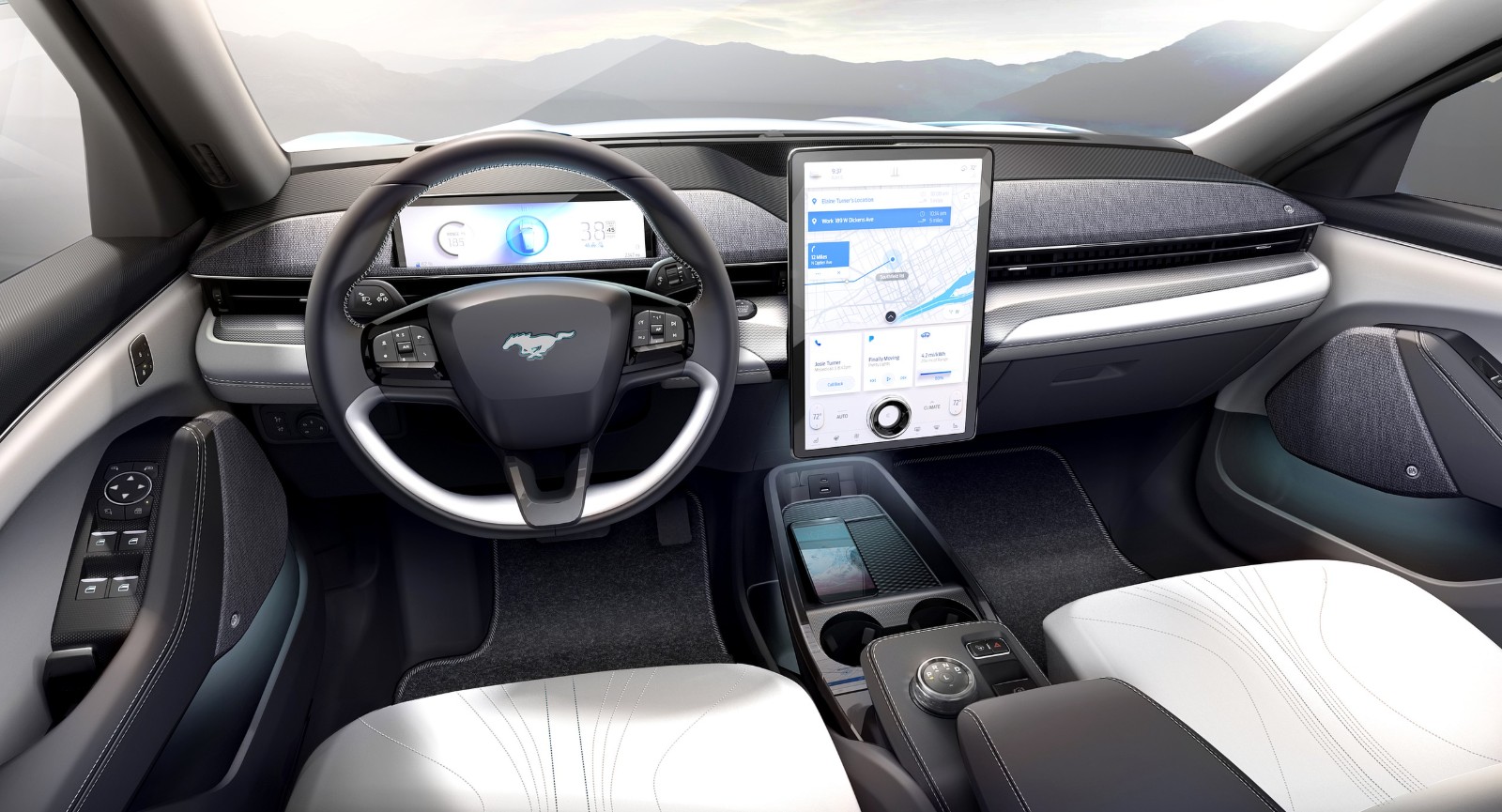
Inside, the 2028 Ford Mustang Mach-E should continue emphasizing a clean, technology-focused cabin with comfortable accommodation for five passengers. The existing interior features a large 15.5-inch central touchscreen and a 10.2-inch digital instrument cluster, creating a modern dashboard layout that places important information within easy reach. Ford could improve this arrangement through faster processors, more intuitive software menus, and additional customization options for the digital displays. Higher trim levels may offer upgraded upholstery, improved seat cushioning, ventilated front seats, and more sophisticated decorative materials. A panoramic glass roof could remain available, helping create a brighter passenger compartment. Practicality should also remain a priority, with rear-seat folding functionality, useful storage compartments, and the front trunk providing additional space for everyday belongings and travel equipment.
2028 Ford Mustang Mach-E Specs
Engine & Performance
Electric performance will remain the defining characteristic of the 2028 Ford Mustang Mach-E. Unlike traditional SUVs that depend on gasoline engines and multi-speed transmissions, the Mach-E uses electric motors to deliver immediate torque and smooth acceleration. The 2027 lineup provides a useful reference for understanding the performance that could carry forward into 2028. Depending on battery and drivetrain configuration, the latest model offers power outputs ranging from approximately 264 horsepower to 480 horsepower. Rear-wheel-drive versions provide a more conventional performance balance, while electronic all-wheel-drive configurations use additional motor hardware to improve traction and acceleration. Ford could refine these systems for the 2028 model through revised power electronics, more efficient motor operation, and improved thermal management.
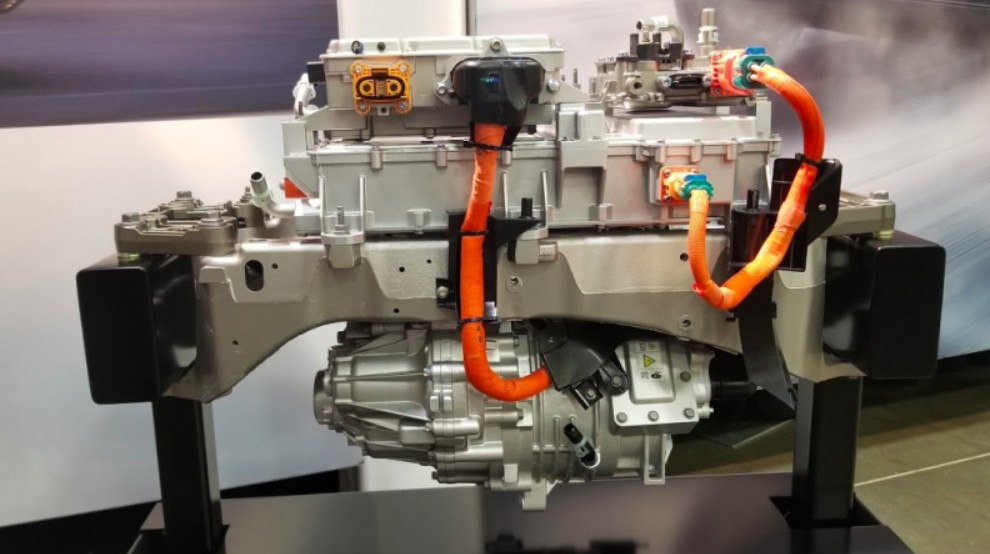
The GT configuration should remain the performance-focused option for buyers who prioritize acceleration and stronger electric output. The existing high-performance Mach-E GT delivers up to 480 horsepower, with the available GT Performance Upgrade improving acceleration to approximately 3.3 seconds from zero to 60 mph under Ford’s published testing conditions. This level of performance makes the electric SUV competitive with several considerably more expensive performance vehicles. The Rally version offers a different driving personality, combining strong electric output with suspension tuning and equipment designed for more spirited driving on loose surfaces. Ford could continue refining acceleration control, regenerative braking calibration, and traction management for 2028. These improvements would help make the SUV more predictable during aggressive driving while maintaining the smooth power delivery expected from an electric vehicle. 2028 Ford Mustang Mach-E Review
2028 Ford Mustang Mach-E Fuel Economy
Battery technology and driving range will be especially important for the next model year. The 2027 Mustang Mach-E introduces extended-range battery equipment as standard across the lineup, with the 73-kWh standard-range and 88-kWh extended-range configurations used in selected models and a larger 91-kWh pack for the GT. Ford lists estimated driving ranges reaching approximately 320 miles for certain configurations, depending on drivetrain and equipment. The GT and Rally versions prioritize stronger performance, which can result in lower estimated range. For 2028, Ford could focus on improving battery efficiency, reducing energy consumption, and optimizing charging behavior rather than immediately introducing a dramatically larger battery. The final EPA range will depend on the specific battery, motor configuration, wheels, tires, and vehicle weight.
Charging convenience and energy management will also influence the ownership experience. The Mustang Mach-E supports home charging through a compatible 240-volt charging installation, while DC fast charging allows drivers to replenish the battery during longer journeys. Ford could improve the charging experience through more accurate route planning, better battery preconditioning, and enhanced charging-station information within the navigation system. The existing vehicle also supports Ford’s charging ecosystem and compatible public charging networks, including access arrangements for Tesla Superchargers using the appropriate adapter and charging equipment. For the 2028 model, more efficient thermal management and improved charging software could make long-distance travel easier. Actual charging times will depend on battery temperature, charger output, charging state, and the specific vehicle configuration.
2028 Ford Mustang Mach-E Safety Features
Safety technology should remain a central component of the 2028 Mustang Mach-E’s equipment strategy. Ford’s available driver-assistance technologies include Pre-Collision Assist with Automatic Emergency Braking, Blind Spot Information System, Lane-Keeping System, and Adaptive Cruise Control. BlueCruise hands-free highway driving is also available on appropriately equipped versions, providing assistance on compatible sections of divided highways. Ford could further improve camera processing, radar performance, and software-based hazard detection for the next model year. Additional features such as improved parking assistance, more detailed surround-view camera functionality, and enhanced driver monitoring would be useful additions. The electric vehicle’s low-mounted battery pack also contributes to a low center of gravity, which can support stable handling. Nevertheless, final safety ratings and standard equipment will depend on the production specification and independent crash testing.
2028 Ford Mustang Mach-E Release Date & Price
The release date of the 2028 Ford Mustang Mach-E remains unconfirmed, as Ford has not published an official launch schedule for this model year. If the company maintains its conventional model-year production cycle, the 2028 version could begin appearing at dealerships during the second half of 2027 or early 2028. However, the timing of a possible larger redesign is less certain. Industry reporting has suggested that a comprehensive next-generation replacement could be delayed until later in the decade, meaning the 2028 vehicle may continue using the existing architecture with selected technical and equipment improvements. Customers interested in the next Mach-E should monitor Ford’s official announcements and ordering information rather than relying on speculative production dates.
Manufacturing and product strategy will influence how Ford approaches the next stage of Mach-E development. The company is investing in more affordable electric vehicle architectures, improved battery production, and manufacturing methods designed to reduce vehicle costs. However, Ford has stated that its Universal EV platform will not underpin the Mustang Mach-E. This suggests that the company may continue developing the current electric crossover separately from its lower-cost EV family. For the 2028 model, improvements in battery efficiency, electronic systems, and manufacturing optimization could be more important than an entirely new platform. Ford will also need to consider consumer expectations surrounding vehicle affordability, charging infrastructure, battery durability, and long-term ownership costs when determining the final equipment and pricing strategy.
Competition will remain intense, particularly from the Tesla Model Y, Hyundai IONIQ 5, Kia EV6, Chevrolet Blazer EV, and other electric crossovers. The Tesla Model Y continues to attract customers through its charging ecosystem, software experience, and competitive driving range. Hyundai and Kia offer distinctive styling, fast-charging technology, and spacious interiors, while Chevrolet provides additional choices for buyers comparing electric SUVs across different price categories. The Mustang Mach-E has a different selling point: its combination of Mustang-inspired design, engaging acceleration, recognizable branding, and practical SUV functionality. To maintain its position, Ford will need to deliver competitive range, reliable charging performance, attractive pricing, and a user-friendly ownership experience. The 2028 model could strengthen its position if improvements focus on these areas rather than cosmetic changes alone.
For prospective buyers, the 2028 Mustang Mach-E could be an interesting option for daily commuting, family transportation, and longer highway journeys. Its electric powertrain eliminates regular gasoline purchases and reduces the number of routine mechanical maintenance items associated with traditional combustion engines. Home charging can also make everyday ownership more convenient for drivers with suitable electrical installations. The spacious five-passenger interior, rear cargo compartment, and front trunk provide useful flexibility for shopping, luggage, and weekend travel. Performance-oriented buyers can consider the GT, while customers who prefer a more distinctive appearance and different driving character may find the Rally appealing. Ultimately, the value of the 2028 model will depend on its final range, charging performance, technology improvements, warranty coverage, and purchase price.
The 2028 Ford Mustang Mach-E is expected to offer several configurations aimed at different types of electric vehicle customers. The current lineup provides four principal models: Select, Premium, GT, and Rally. Each version has a different balance of price, range, comfort, and performance. Select serves as the entry point, offering essential electric technology and everyday practicality. Premium adds more convenience and luxury-oriented equipment, making it attractive to families and drivers who spend considerable time behind the wheel. GT concentrates on high-performance acceleration and upgraded chassis components, while Rally introduces a more adventurous driving character. Ford could retain this basic structure for 2028 while revising individual equipment packages and introducing additional appearance options.
The Select trim should remain the most accessible way to enter the Mustang Mach-E lineup. It is expected to provide the essential features that modern electric vehicle buyers require, including a large central touchscreen, digital driver display, wireless Apple CarPlay and Android Auto compatibility, and convenient connected services. Rear-wheel drive could remain available for customers who prioritize efficiency and a lower purchase price, while electronic all-wheel drive would provide additional traction and stronger acceleration. Standard safety technology should also include important driver-assistance features designed to support daily commuting. Ford could improve the Select’s appeal by making more convenience equipment standard and refining interior materials. This configuration would be particularly suitable for customers transitioning from gasoline-powered compact SUVs to fully electric transportation.
Premium should continue serving customers who want a more sophisticated electric SUV without moving into the expensive performance category. The existing configuration offers upgraded seating equipment, heated and ventilated front seats, a premium B&O sound system, and additional interior comfort features. An available panoramic roof can further improve the cabin atmosphere, while larger wheels and distinctive exterior finishes create a more upscale appearance. The extended-range battery should make Premium particularly attractive to drivers who regularly travel longer distances or want additional flexibility between charging sessions. Ford may introduce new upholstery choices, improved ambient lighting, and additional connected technology for 2028. These features could make the Premium model the most balanced choice for buyers who value comfort, driving range, and everyday usability.
At the top of the range, GT and Rally will continue appealing to buyers who want a more distinctive interpretation of electric performance. The GT delivers stronger acceleration, performance-oriented seating, upgraded braking equipment, and available MagneRide suspension through the appropriate performance package. The Rally adds specialized suspension tuning, unique exterior graphics, and Michelin CrossClimate2 tires designed to provide greater confidence on different road surfaces. Ford could further differentiate these models through exclusive wheel designs, updated brake finishes, and additional driving settings. Pricing for the 2028 lineup has not been announced, but the 2027 range provides a useful reference. The 2027 Select starts at approximately $42,040 including destination and delivery, while higher configurations extend into the upper-$50,000 range. A preliminary 2028 estimate would place the lineup around $42,000 to $60,000 before options, taxes, and potential destination adjustments. These figures are projections, not official Ford pricing. 2028 Ford Mustang Mach-E Review
Conclusion
The 2028 Ford Mustang Mach-E could remain an important player in the electric SUV market by combining distinctive Mustang styling with improved battery efficiency, modern connectivity, and strong electric performance. Although a completely new generation has not been confirmed, further refinements to the existing model could make it more competitive against newer electric crossovers.
Its biggest advantages should remain the instant acceleration, available all-wheel drive, practical five-passenger cabin, and performance-focused GT configuration. The Premium model could offer the best balance of comfort and driving range, while the Rally version provides a more adventurous alternative.
For buyers considering an electric SUV, the upcoming Mach-E deserves attention. However, waiting for Ford’s official announcement will be important before making a purchase decision, particularly regarding battery specifications, charging performance, final pricing, and the possibility of a larger redesign.
Note: A significant portion of the content in this website entry was compiled from sources that were available before the product’s launch. Pursue data from reputable approved reputable sources or engage with your nearest dealerships for recent updates.
Frequently Asked Questions
2028 Ford Mustang Mach-E Review, Specs, Dimensions - The 2028 Ford Mustang Mach-E could represent an important stage in the evolution of Ford's electric SUV strategy. Since its introduction, the Mustang Mach-E has established itself as a distinctive alternative to conventional gasoline-powered performance SUVs, combining Mustang-inspired styling with…
A completely redesigned seventh-year version should not automatically be expected, as Ford has not officially announced a full redesign or confirmed the complete specifications of the 2028 Mustang Mach-E. The 2027 model year already introduces meaningful developments, including a new Trail Package, revised battery availability, and updated motor…
One of the most important developments surrounding the future Mach-E concerns Ford's next-generation electric vehicle strategy. The company has been developing a Universal EV platform intended to support a new family of affordable electric vehicles, but Ford has indicated that this architecture will not be used for the…
The technology strategy could become another major part of the 2028 update plan. Modern electric SUV customers increasingly expect fast infotainment systems, intelligent navigation, wireless smartphone connectivity, sophisticated driver assistance, and convenient charging management. Ford could improve the Mustang Mach-E's digital interface with more responsive software, expanded connected…
2028 Ford Mustang Mach-E Redesign and Update Plan Exterior & Interior The exterior design of the 2028 Ford Mustang Mach-E is expected to retain the athletic proportions and recognizable styling elements that distinguish it from ordinary electric crossovers. Its sloping roofline, sculpted body panels, muscular rear shoulders, and…