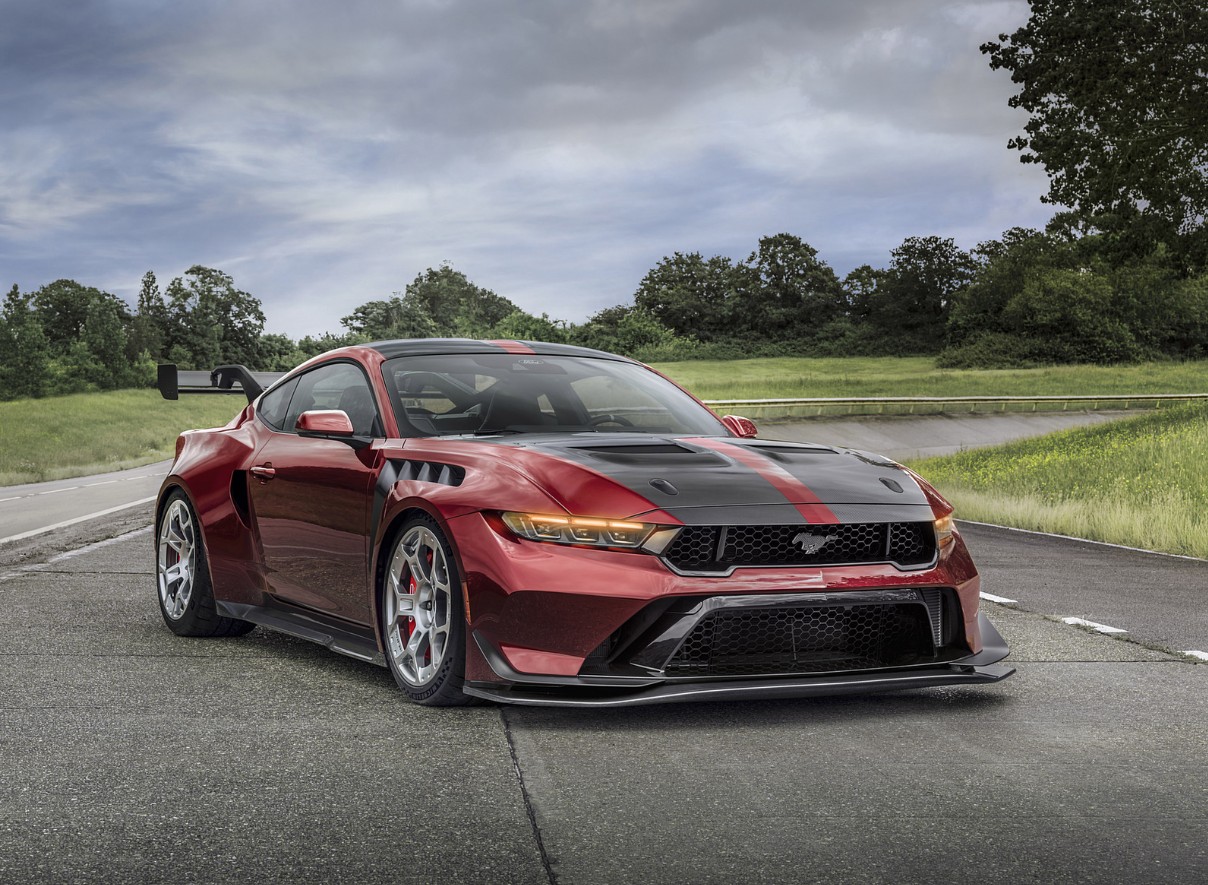
2028 Ford Mustang GTD Price, Specs, Dimensions – The 2028 Ford Mustang GTD is expected to continue the mission of one of the most extreme road-legal Mustangs ever developed. Unlike conventional Mustang models designed to balance everyday comfort with powerful acceleration, the GTD is engineered around serious track performance. Its combination of a supercharged V8 engine, advanced aerodynamics, carbon-fiber construction, and sophisticated suspension technology places it in the territory of high-end European supercars. The GTD also carries an important distinction: it brings engineering ideas developed for competition into a road-going Mustang while retaining the unmistakable character of Ford’s iconic performance coupe.
For the 2028 model year, the GTD is expected to remain part of Ford’s limited-production program. The company announced an application round in April 2026 covering the 2027, 2028, and 2029 model years, giving selected customers an opportunity to pursue one of these exceptionally rare cars. That announcement makes a 2028 GTD a realistic part of the production plan, although it does not establish every specification, price, or delivery date for that particular model year. Buyers should therefore distinguish between the established GTD formula and possible future updates that Ford has not officially announced.
The existing Mustang GTD already provides a strong foundation for the next model year. Its 5.2-liter supercharged V8 produces 815 horsepower and 664 lb-ft of torque, while its claimed top speed reaches 202 mph. Ford has also publicized a Nürburgring Nordschleife lap time of 6 minutes and 40.835 seconds, placing the car among the most capable American production performance vehicles. These figures establish the performance standard that enthusiasts will expect from the 2028 version. Any future changes will need to preserve the GTD’s balance of immense power, aerodynamic efficiency, braking capability, and high-speed stability.
The 2028 Mustang GTD should appeal to collectors, experienced track drivers, and enthusiasts who want something substantially more focused than a conventional Mustang Dark Horse or GT. Its appeal is not based on horsepower alone. The car combines specialized mechanical components, extensive lightweight materials, a distinctive cockpit, and a production process that makes ownership difficult to secure. We expect the 2028 model to retain this exclusive identity, with its value determined by its engineering, limited availability, and connection to Ford’s motorsport ambitions. Until Ford publishes a dedicated 2028 specification sheet, however, the current GTD remains the most reliable reference point. 2028 Ford Mustang GTD Price
2028 Ford Mustang GTD Redesign and Update Plan
Exterior & Interior
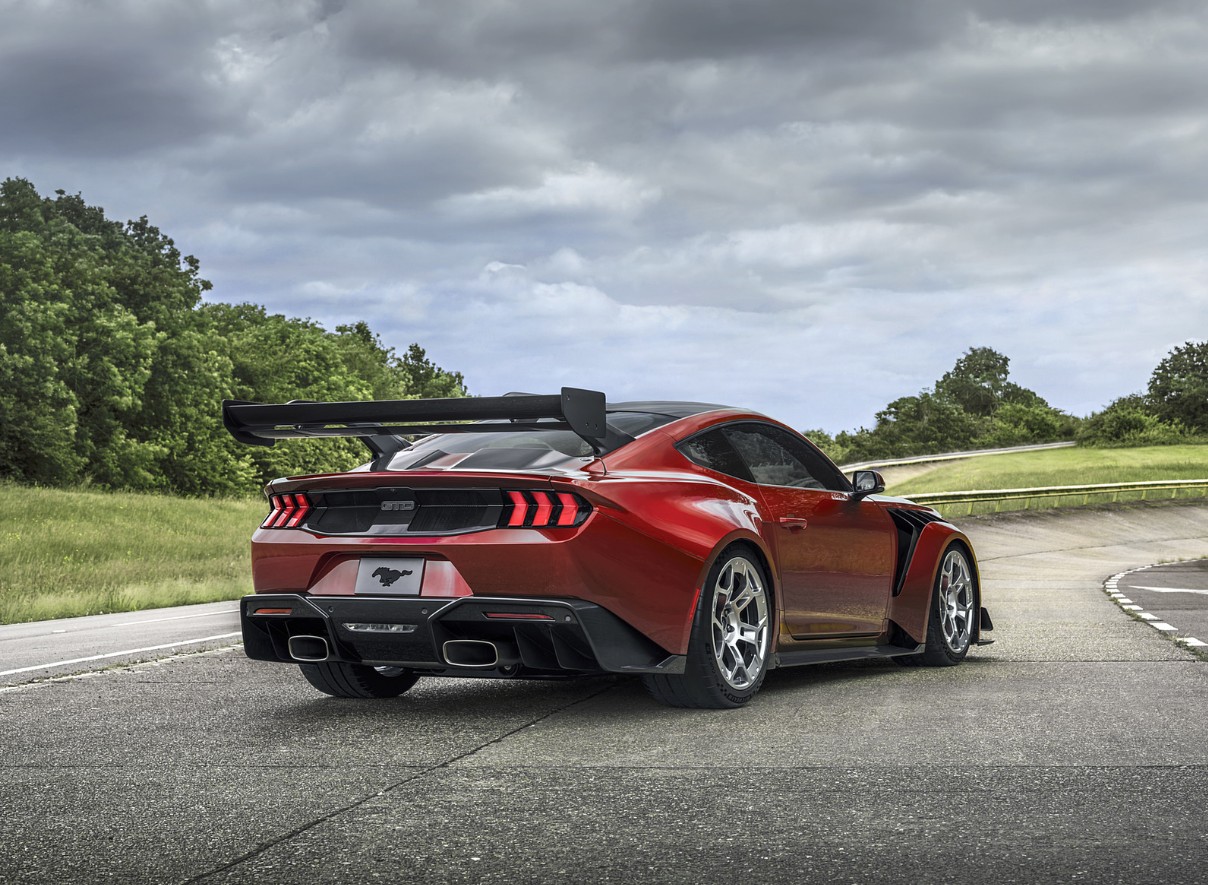
The exterior of the 2028 Ford Mustang GTD is expected to preserve the aggressive proportions that distinguish the car from standard Mustang versions. Its wide body, sculpted front section, large aerodynamic openings, and prominent rear wing are functional elements rather than decorative additions. The design is intended to manage airflow, support cooling, and generate the aerodynamic performance required for high-speed circuit driving. Extensive carbon-fiber body components help reduce weight while contributing to the GTD’s distinctive appearance. If the 2028 model continues the current design, its road presence should remain unmistakable, with a low stance and muscular surfaces that communicate its motorsport-inspired purpose.
Aerodynamic management is one of the most important parts of the GTD’s exterior engineering. The current car uses advanced aerodynamic features, including a drag-reduction system designed to balance downforce and straight-line speed. Its rear wing and underbody components help maintain stability when the vehicle is driven aggressively, while the front aerodynamic elements contribute to the overall airflow strategy. This is particularly important for a car capable of reaching a claimed 202 mph. At those speeds, small changes in airflow can affect stability and performance, making aerodynamic development just as important as engine output. Ford has not announced a new 2028 aerodynamic system, so the existing design remains the best guide.
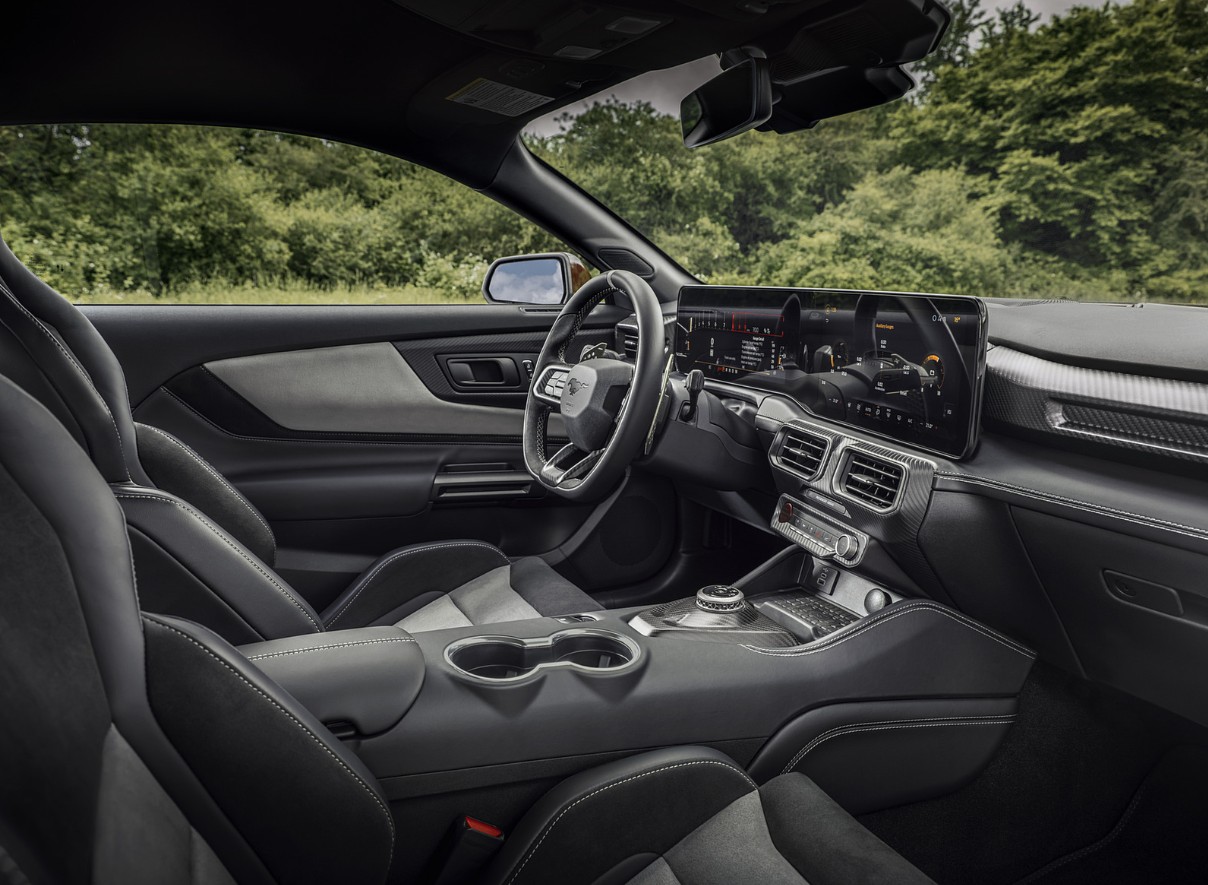
The cabin follows a very different philosophy from the interior of an ordinary Mustang. The GTD is a two-seat performance coupe, and its cockpit is designed around the driver rather than rear passenger accommodation. The seating position, steering wheel, instrument displays, and control layout support focused driving, while premium materials give the interior an appropriately exclusive character. Carbon-fiber details and performance-oriented trim reinforce the vehicle’s connection to motorsport. The cabin is not intended to provide the maximum storage space or passenger flexibility of a conventional grand touring coupe. Instead, it prioritizes driver engagement, a secure seating position, and an environment suited to operating a very powerful machine.
Material selection is an important part of the GTD’s premium identity. Depending on the configuration and available options, buyers can expect a combination of leather, performance-oriented upholstery, carbon-fiber detailing, and distinctive accent finishes. The existing GTD has also offered special interior treatments and available 3D-printed titanium components on certain editions. These details help distinguish the car from less expensive Mustang models and underline its limited-production character. For 2028, Ford could continue offering carefully selected personalization options, although the exact colors, seat materials, trim combinations, and optional components remain unconfirmed. The central expectation is a cockpit that combines specialist performance equipment with the craftsmanship expected from a six-figure-plus supercar.
A major redesign for the 2028 Ford Mustang GTD has not been officially confirmed. The car’s existing engineering package is already highly specialized, and a complete overhaul would be unnecessary unless Ford identifies meaningful opportunities to improve performance, durability, or production efficiency. The more realistic expectation is a continuation of the current GTD architecture, potentially accompanied by small equipment changes, revised exterior finishes, updated software, or additional personalization choices. Such developments would allow Ford to keep the car competitive without changing the mechanical identity that makes the GTD different from other Mustang models.
The current GTD was developed with a close connection to the Mustang GT3 racing program. That relationship influences its aerodynamic philosophy, suspension layout, lightweight construction, and rear-mounted transmission arrangement. For 2028, retaining these elements would make sense because they form the foundation of the car’s performance. Ford could make refinements to calibration, cooling management, or component durability, particularly for owners who regularly use the vehicle on demanding circuits. However, those possibilities should be treated as potential engineering updates rather than confirmed improvements. No official announcement currently establishes a new chassis, revised engine output, or completely redesigned aerodynamic package specifically for 2028.
Exterior personalization could be one of the more noticeable areas of change. The GTD has already demonstrated that its carbon-fiber surfaces and dramatic bodywork can support distinctive appearance packages. Ford’s Spirit of America edition, for example, introduced a striking white exterior with offset red and blue stripes while retaining the established mechanical package. That special appearance treatment illustrates how Ford can create visual differentiation without redesigning the underlying vehicle. The 2028 model could receive new colors, wheel finishes, graphics, or limited-run appearance options, but buyers should not assume that any particular package will be available until the manufacturer confirms it.
Inside the cabin, possible updates could focus on materials, trim combinations, infotainment software, and driver-focused equipment. The GTD is not intended to function like a luxury grand tourer, so major changes to its basic cockpit layout would be less important than maintaining clear controls and a strong driving position. Ford may also continue offering premium personalization choices, including distinctive upholstery, contrast stitching, and specialized interior accents. Nevertheless, a new dashboard, larger display, upgraded audio system, or revised seat design has not been confirmed for the 2028 model. The safest expectation is continuity, with any additional features dependent on Ford’s final model-year announcement. 2028 Ford Mustang GTD Price
2028 Ford Mustang GTD Specs
Engine & Performance
The heart of the current Ford Mustang GTD is a 5.2-liter supercharged V8 engine producing 815 horsepower and 664 lb-ft of torque. This engine is the defining feature of the GTD’s performance identity, delivering a level of output far beyond the standard Mustang range. Its supercharger helps provide the airflow required to generate substantial power, while its high-performance internal components are designed to withstand demanding operating conditions. The engine’s character is particularly important because the GTD is intended to deliver both powerful acceleration and sustained circuit performance. Unless Ford announces a revised powertrain, these established figures are the most credible expectations for the 2028 model.
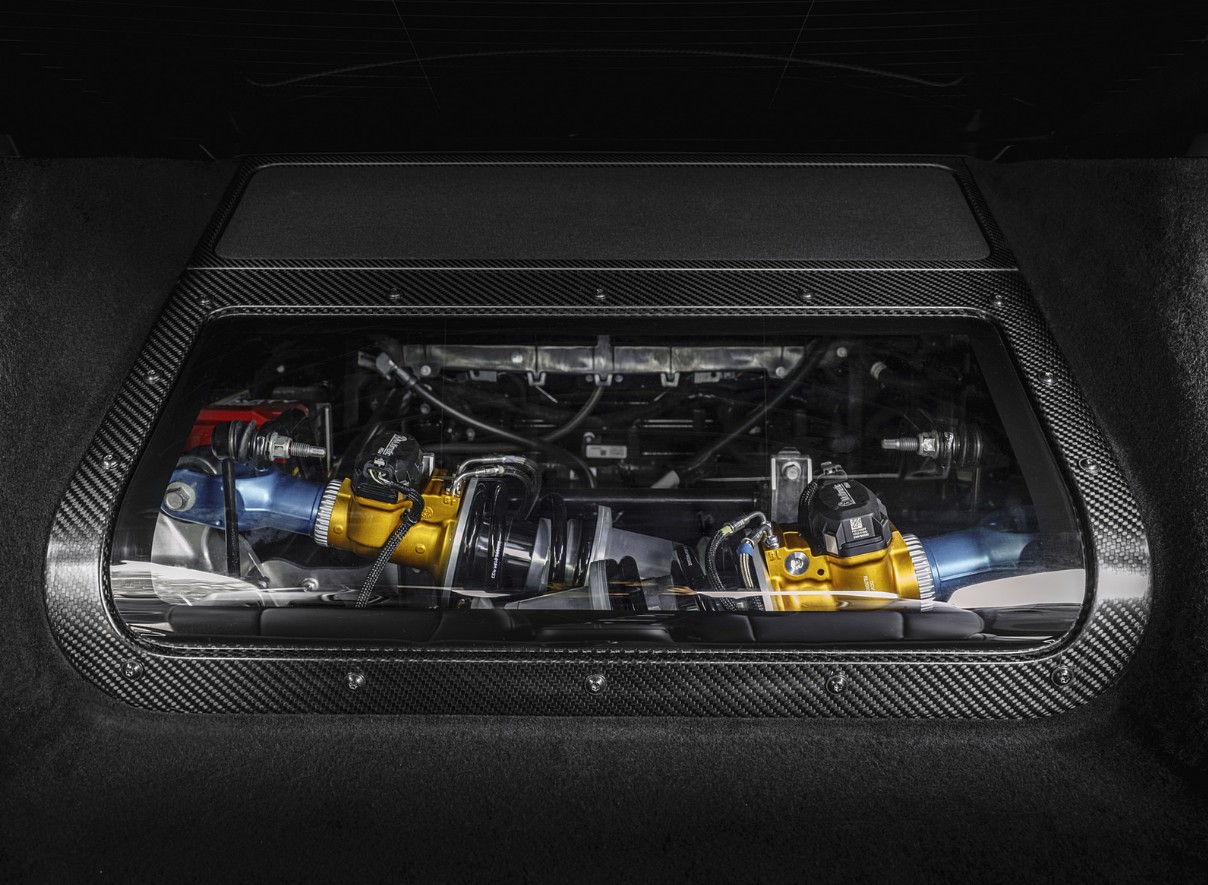
Power is delivered through an eight-speed dual-clutch transmission mounted at the rear in a transaxle configuration. A carbon-fiber driveshaft connects the front-mounted engine to the rear transmission, helping support a balanced vehicle layout. This arrangement is different from the conventional transmission packaging found in many Mustang models and is an important part of the GTD’s specialized engineering. The dual-clutch system is designed to deliver rapid gear changes while keeping the engine within its useful power range. Combined with rear-wheel drive, it gives the GTD the mechanical character expected of a serious performance coupe. Ford has not confirmed a different transmission or drivetrain for the 2028 model year.
The current GTD’s performance hardware extends well beyond its engine and transmission. Its race-inspired suspension uses advanced geometry and semi-active dampers to help control body movement, maintain tire contact, and support precise handling. The car also features a sophisticated rear suspension arrangement, while carbon-ceramic brakes provide the stopping capability required for repeated high-speed deceleration. Wide performance tires contribute to grip under acceleration and cornering loads. Ford has reported a 202-mph top speed and a Nürburgring lap time of 6 minutes and 40.835 seconds. These figures demonstrate the engineering ambition behind the GTD, although they should not automatically be treated as independently verified 2028 model-year test results.
2028 Ford Mustang GTD Fuel Economy
Fuel economy is unlikely to be a major selling point for the Mustang GTD, but it remains relevant for owners who intend to drive the car on public roads. The supercharged 5.2-liter V8 is designed to deliver exceptional performance rather than low fuel consumption. Published figures for the earlier GTD have been reported at approximately 10 mpg in the city, 17 mpg on the highway, and 12 mpg combined under US EPA testing. Those figures provide a useful reference, but they are not a confirmed rating for the 2028 model. Official 2028 EPA figures have not been released. Actual consumption will also depend heavily on driving style, traffic, road conditions, and how frequently the car is used on a circuit. 2028 Ford Mustang GTD Price
2028 Ford Mustang GTD Safety Features
Safety in the 2028 Mustang GTD should be understood through two separate priorities: road-use protection and high-performance vehicle control. A powerful coupe capable of extreme speeds requires a rigid structure, predictable handling, strong braking performance, and tires capable of operating under substantial loads. The existing GTD’s carbon-ceramic braking system, advanced suspension, aerodynamic development, and stability-focused engineering all contribute to controlling the vehicle during demanding driving. Ford has not yet published a dedicated 2028 safety equipment list, so specific standard driver-assistance features, crash-test ratings, or changes to active safety technology should not be assumed. Buyers should consult the final model-year documentation for confirmed equipment.
2028 Ford Mustang GTD Release Date & Price
The 2028 Ford Mustang GTD is not expected to follow the traditional Mustang trim structure, which includes multiple versions with clearly separated equipment levels. The GTD is a specialized, limited-production model positioned at the top of the Mustang performance family. Rather than choosing between several mainstream trims, approved customers are likely to select from the configurations, packages, finishes, and optional equipment Ford makes available during the ordering process. This approach reflects the car’s exclusive production strategy and its more personal purchasing experience. A separate 2028 trim-level chart has not been announced, so there is currently no confirmed list of named GTD grades.
The existing GTD configuration provides an indication of how Ford may organize equipment. The core vehicle includes its supercharged V8 powertrain, advanced suspension, carbon-fiber components, specialized transmission, and performance-focused braking hardware. Certain appearance and performance packages can add further equipment or distinctive finishes. Ford has also introduced special editions, including the Spirit of America treatment, which changes the car’s visual presentation while retaining its established mechanical foundation. It is important not to confuse a special edition with a completely separate mechanical trim. For the 2028 model year, Ford has not confirmed whether new special editions, optional packages, or revised equipment combinations will be offered.
Pricing will be one of the biggest considerations for anyone interested in the 2028 Mustang GTD. The car’s original pricing has placed it well above conventional Mustang models, with published pricing for an earlier GTD configuration starting around $325,000 before certain options and additional costs. The final transaction price can rise considerably when expensive packages and personalization choices are included. Ford has not announced an official 2028 MSRP, so a precise figure would be premature. A price above $325,000 is a reasonable reference based on the car’s previous positioning, but it should not be presented as a confirmed 2028 starting price.
The GTD’s limited production and application-based purchasing process also affect its real-world cost and availability. Buyers may face additional expenses related to taxes, registration, transportation, insurance, and optional equipment. The car’s rarity can also influence resale values, although future market prices cannot be predicted reliably. Prospective owners should pay attention to Ford’s official ordering information rather than relying on speculative dealer advertisements or unofficial allocation claims. The 2028 model will likely remain an expensive specialist vehicle, and its final price will depend on the manufacturer’s published pricing, the selected configuration, and the purchasing market.
Ford’s April 2026 announcement stated that a new application process would cover the 2027, 2028, and 2029 Mustang GTD production years. This is significant because it establishes the 2028 model year within Ford’s announced production and customer-selection program. However, it does not provide a confirmed showroom launch date, first-delivery schedule, or exact production calendar for every market. The GTD’s specialist manufacturing process also differs from the normal mass-production schedule of mainstream Mustang models. Interested buyers should therefore monitor Ford’s official GTD communications for application results, ordering instructions, and delivery estimates rather than assuming that all 2028 examples will arrive at the same time.
Conclusion
The 2028 Ford Mustang GTD is expected to remain one of the most ambitious road-legal performance cars in Ford’s history. Its combination of an 815-horsepower supercharged V8, rear-mounted dual-clutch transaxle, carbon-fiber construction, advanced suspension, and serious aerodynamic development gives it a character that goes far beyond the traditional American muscle car formula. The existing GTD has already demonstrated its ability to compete on an international performance stage, and the planned 2028 production year gives another group of enthusiasts the opportunity to pursue this rare machine.
For buyers considering the next model year, the most important details are its expected mechanical continuity, limited availability, and premium pricing. A major redesign, revised engine output, exact 2028 MSRP, and specific delivery dates remain unconfirmed. Nevertheless, the established GTD platform provides a compelling indication of what the next model should deliver. Anyone seeking a highly exclusive Mustang with genuine track-focused engineering will find the 2028 GTD worth following closely, provided they understand that final specifications and purchase opportunities depend on Ford’s official announcements.
Note: A significant portion of the content in this website entry was compiled from sources that were available before the product’s launch. Pursue data from reputable approved reputable sources or engage with your nearest dealerships for recent updates.
Frequently Asked Questions
2028 Ford Mustang GTD Price, Specs, Dimensions - The 2028 Ford Mustang GTD is expected to continue the mission of one of the most extreme road-legal Mustangs ever developed. Unlike conventional Mustang models designed to balance everyday comfort with powerful acceleration, the GTD is engineered around serious track…
For the 2028 model year, the GTD is expected to remain part of Ford's limited-production program. The company announced an application round in April 2026 covering the 2027, 2028, and 2029 model years, giving selected customers an opportunity to pursue one of these exceptionally rare cars. That announcement…
The existing Mustang GTD already provides a strong foundation for the next model year. Its 5.2-liter supercharged V8 produces 815 horsepower and 664 lb-ft of torque, while its claimed top speed reaches 202 mph. Ford has also publicized a Nürburgring Nordschleife lap time of 6 minutes and 40.835…
The 2028 Mustang GTD should appeal to collectors, experienced track drivers, and enthusiasts who want something substantially more focused than a conventional Mustang Dark Horse or GT. Its appeal is not based on horsepower alone. The car combines specialized mechanical components, extensive lightweight materials, a distinctive cockpit, and…
2028 Ford Mustang GTD Redesign and Update Plan Exterior & Interior The exterior of the 2028 Ford Mustang GTD is expected to preserve the aggressive proportions that distinguish the car from standard Mustang versions. Its wide body, sculpted front section, large aerodynamic openings, and prominent rear wing are…